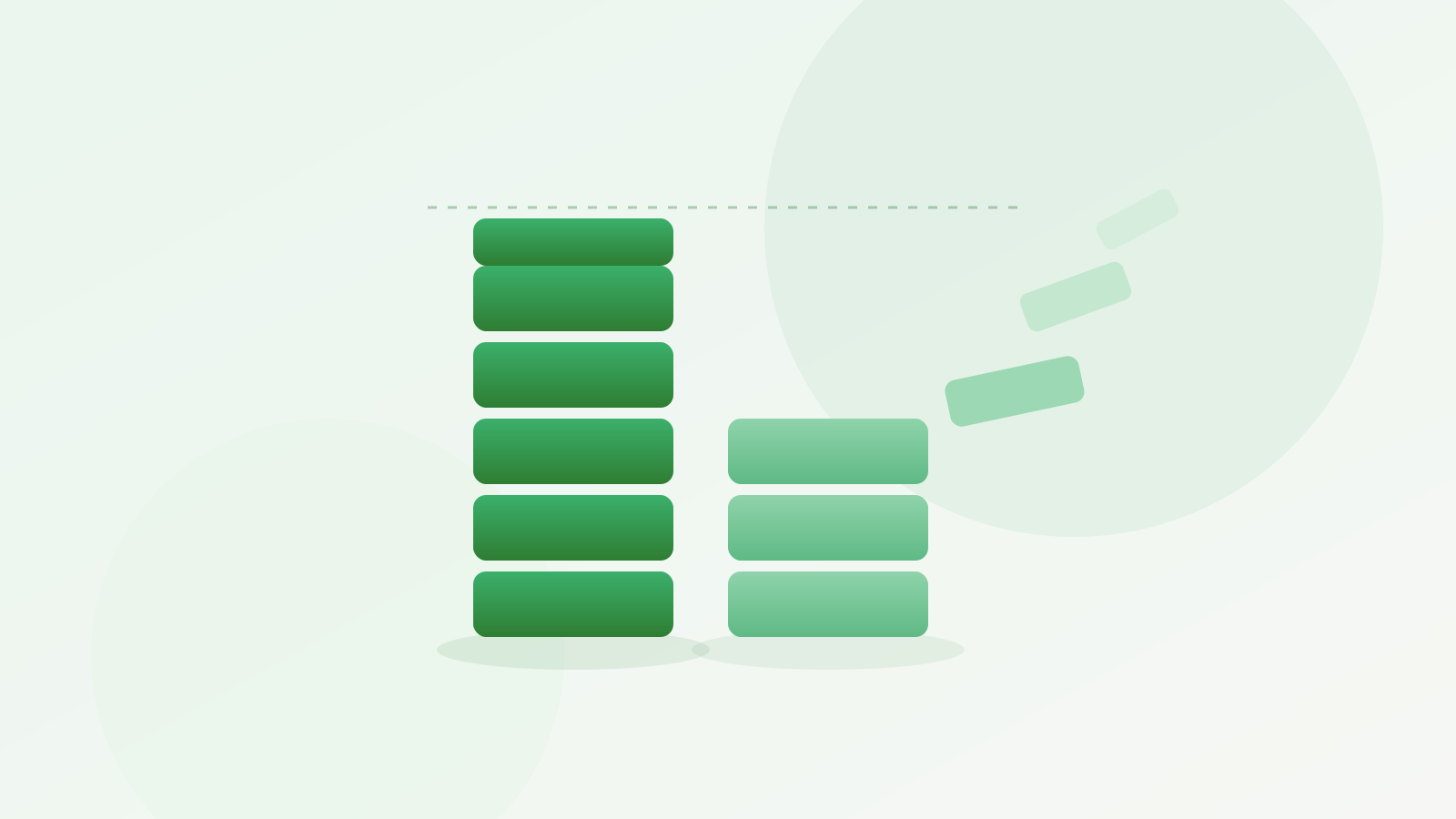
Utilization is the cleanest number in a service business: of the hours you pay people for, how many end up on a client invoice? It's also the number most agencies quietly get wrong — and 2024 was the worst year for it in half a decade.
According to SPI Research's 2025 Professional Services Maturity Benchmark — a survey of just over 400 firms — average billable utilization landed at 68.9%, the lowest figure in five years. For context, most cost structures need utilization in the mid-70s just to break even, and creative and marketing agencies, which usually carry lower billing rates, often need 75–85% to stay healthy.
Why a few percentage points matter so much
Utilization is leverage in reverse. A 10-person team at a $150 blended rate and 75% utilization bills roughly $2.34M a year. Drop to 69% and you bill about $2.15M — a ~$190K gap, on the exact same payroll. Nobody worked less; the hours just never made it onto an invoice.
That's why utilization is the metric investors and agency owners obsess over: small movements swing profitability more than almost anything else you control.
Where the missing hours actually go
1. Real internal work that no one plans for
Some non-billable time is healthy and necessary — sales, hiring, training, internal projects. The problem is that most firms never measure it, so it grows unchecked. You can't manage a number you don't see.
2. Billable work that never gets tracked
The five-minute client call, the "quick" revision, the Slack request handled between meetings. Individually trivial, collectively a major leak — and it disproportionately hits the work that would have been billable.
3. Admin created by tool sprawl
When your tracker, project board, chat, and invoicing app are four separate products, people spend real time re-entering data and hunting for context across them. That overhead is pure non-billable drag — and it's the piece you can actually engineer away.
How the best firms push utilization back up
- Measure utilization weekly, per person and per project. Monthly is too late to change anything.
- Track in real time, not from memory. Reconstructed timesheets consistently under-report — start a timer when the work starts.
- Tie every hour to a task and client. Categorized time is billable, defensible time; uncategorized time is where write-offs come from.
- Protect a deliberate non-billable budget. Decide how much internal time is healthy, then defend the rest.
- Cut the tool tax. Every handoff between apps is non-billable time you can reclaim by consolidating.
Where TRCR fits
TRCR keeps time tracking, projects, profitability, and invoicing in one real-time workspace. Because tracking happens where the work happens, more of it actually gets recorded — and because tracked time flows straight into invoices, fewer billable hours evaporate in the handoff. The utilization and profitability reports show, live, which projects and people are above or below your target while you can still do something about it.
Frequently asked questions
What is a good billable utilization rate for an agency?
Most professional-services firms target roughly 75% to be comfortably profitable. Creative and marketing agencies, which usually have lower billing rates, often need 75–85%. Consulting and legal can be healthy slightly lower (70–75%) because their rates are higher. Above ~85% you risk burnout and quality problems.
What was the average utilization rate in 2024?
SPI Research's 2025 Professional Services Maturity Benchmark put average billable utilization at 68.9% for 2024 — the lowest figure in five years and below the level most firms need to be profitable.
How do you calculate billable utilization?
Billable utilization = billable hours ÷ total available (paid) hours, expressed as a percentage. For example, 30 billable hours out of a 40-hour week is 75% utilization. Track it per person and per project, weekly, so you can act on it.
Why is our utilization lower than we expect?
Usually because billable work is going untracked (small tasks, calls reconstructed from memory) and because admin from switching between separate tools eats into billable time. Real-time tracking tied to tasks and clients, in one system, closes most of that gap.
Sources
Figures are drawn from published industry research; treat them as directional and benchmark against your own numbers.
- Billable Utilization: Formula, Benchmarks & How to Increase It (citing SPI Research 2025 benchmark) — Scoro / SPI Research
- Billable Utilization Rate Statistics in Professional Services Firms — Mosaic
- Utilization Rate: Formula, Benchmarks & How to Improve — Asana
See where your hours and revenue actually go
TRCR keeps time tracking, projects, profitability, and invoicing in one real-time workspace — so the gaps this article describes stop hiding between tools. Start free — no credit card → Free for everyone until Dec 31, 2026 · No limits.