Every extra tool in your stack looks free — it's just another tab. But the cost isn't the subscription; it's the switching. And the switching is relentless.
A Harvard Business Review analysis of how people actually use software found the average worker toggles between applications and websites nearly 1,200 times a day. Each switch is small, but they compound: the same research found people spent a meaningful share of the day just reorienting after toggling — the equivalent of several hours a week lost to re-finding their place.
The refocus tax
Switching isn't free even when it's fast. A joint study by Qatalog and Cornell's Ellis Idea Lab found it takes about 9.5 minutes to return to a focused workflow after switching between digital tools. And the American Psychological Association's work on multitasking shows chronic context switching can eat up to 40% of someone's productive time.
You don't feel 1,200 switches. You feel vaguely busy, vaguely behind, and unsure where the day went. That's what the tax feels like from the inside.
Why service businesses pay this tax twice
For an agency, consultancy, or freelancer, every minute has a billing status. Time spent switching between a tracker, a project board, a chat app, and an invoicing tool isn't just lost focus — it's non-billable time you're paying salary for. You lose the productivity and the billable hour.
Tool sprawl is the root cause, not the symptom
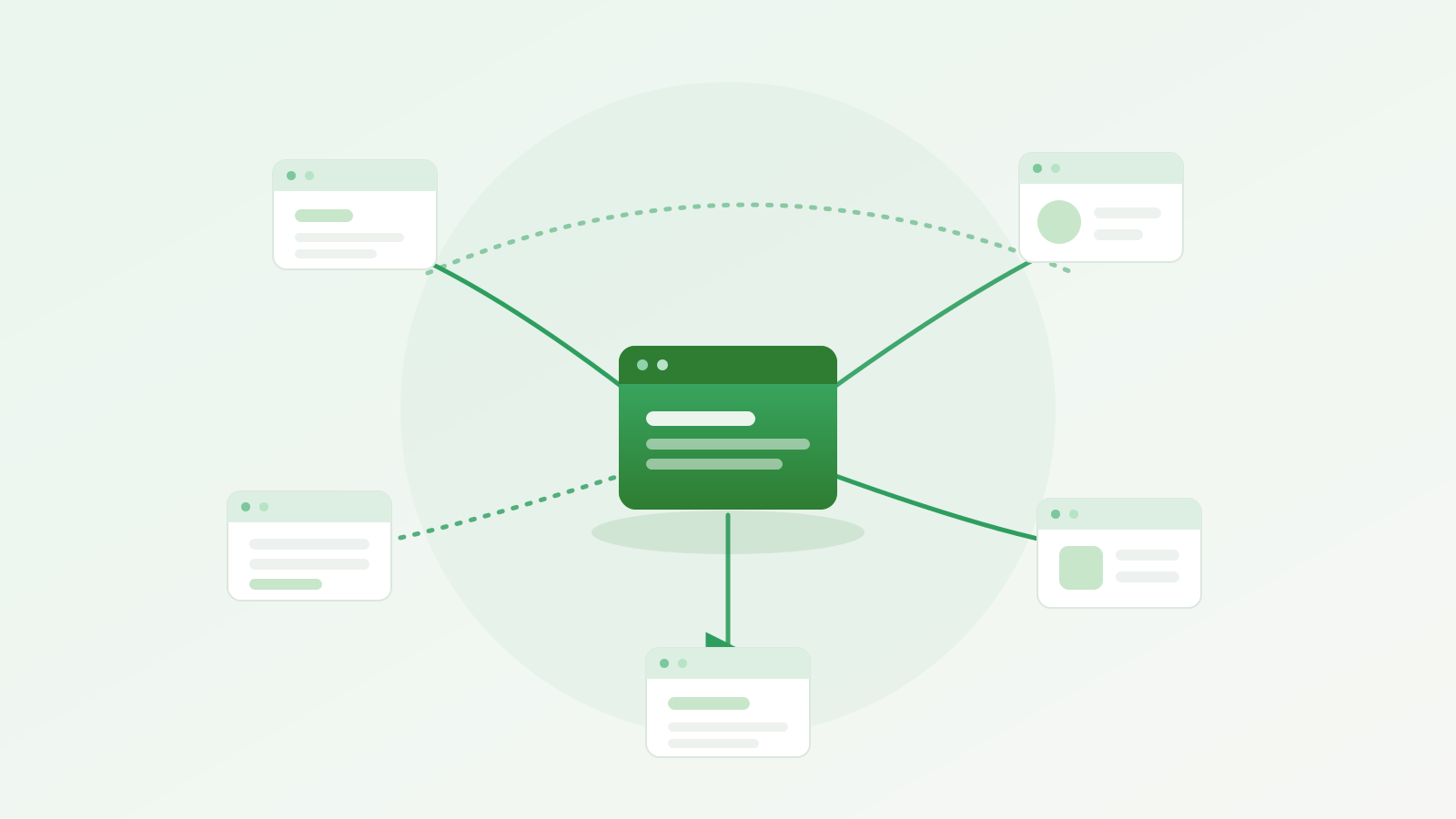
Most switching isn't distraction — it's structural. The work lives in one app, the plan in another, the conversation in a third, the bill in a fourth. People switch because the information is scattered, and every boundary between tools is a place time (and data) leaks.
You can't meditate your way out of a fragmented stack. The fix is fewer boundaries: put the work, the tracking, the conversation, and the billing close enough together that there's nothing to switch to.
How to cut the switching tax
- Count your stack. List the tools a single task touches from start to invoice. If it's more than two or three, that's your switching map.
- Consolidate the daily loop. Time tracking, tasks, and status updates should live in one place — that's where most switches happen.
- Keep conversation next to the work. Task-linked chat removes the biggest context jump: from doing to discussing.
- Close the tracking-to-billing gap. If tracked time becomes an invoice without leaving the app, you delete an entire class of switches.
Where TRCR fits
TRCR exists to collapse that loop. Time tracking, projects and task boards, team chat, and invoicing are one real-time workspace — so the work, the plan, the conversation, and the bill don't live in four apps you bounce between. Fewer switches, less refocus tax, and more of the day spent on billable work instead of on the seams between tools.
Frequently asked questions
How often do workers switch between apps?
Harvard Business Review research found the average digital worker toggles between applications and websites nearly 1,200 times per day — roughly one switch every 24 seconds across an eight-hour workday.
How much time does context switching cost?
It takes about 9.5 minutes to get back into a focused workflow after switching tools (Qatalog + Cornell), and the American Psychological Association's research on multitasking shows heavy context switching can consume up to 40% of productive time.
Why is context switching worse for agencies and freelancers?
Because their time is billable. Switching between separate tools is non-billable overhead they still pay salary for, so they lose twice: the productivity from broken focus and the billable hour that time could have been.
How do you reduce context switching at work?
Reduce the number of tools a single task touches. Consolidate time tracking, tasks, and status updates into one system, keep conversation linked to the work, and let tracked time flow directly into invoices so there's nothing to switch to.
Sources
Figures are drawn from published industry research; treat them as directional and benchmark against your own numbers.
- How Much Time and Energy Do We Waste Toggling Between Applications? — Harvard Business Review
- Multitasking: Switching costs — American Psychological Association
- Context Switching Statistics (Qatalog + Cornell refocus data) — Speakwise
See where your hours and revenue actually go
TRCR keeps time tracking, projects, profitability, and invoicing in one real-time workspace — so the gaps this article describes stop hiding between tools. Start free — no credit card → Free for everyone until Dec 31, 2026 · No limits.